Picasso and Guernica
Posted by wilfried van den elshout on
Picasso and Guernica: Painting the Unbearable
A look at how one afternoon of bombing became the twentieth century's most famous anti-war painting
In early 1937, Pablo Picasso was living in Paris, far from the country he had left behind. The Spanish Civil War was tearing Spain apart, and the Republican government, which had named him honorary director of the Prado, asked him for a large work for its pavilion at the Paris International Exposition. Picasso accepted but struggled to find a subject. For months he produced little of substance.
Then, on April 26, 1937, the Basque town of Guernica was bombed. German and Italian aircraft fighting on behalf of Franco's Nationalist forces attacked the town on a market day, and the raid became one of the first widely reported aerial assaults on a civilian population. Images and accounts reached Paris within days. Picasso, who had been circling the commission without direction, finally had his subject.
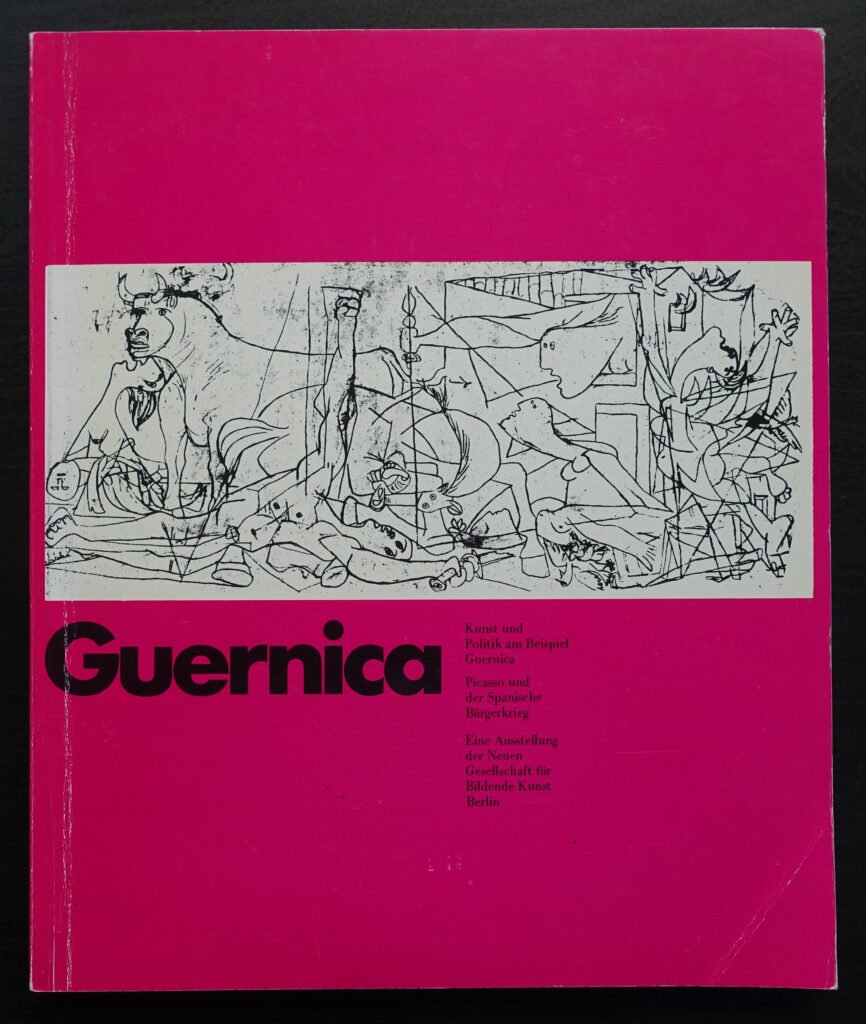
Picasso began work in May in a spacious studio on the Rue des Grands-Augustins. The canvas he chose was enormous, roughly 3.5 meters tall and almost 7.8 meters wide, so large that he worked from a ladder. He sketched obsessively, filling pages with studies of screaming figures, a bull, a horse, and grieving women. His partner and fellow artist Dora Maar photographed the painting at various stages, leaving a rare record of how the composition evolved, shifted, and was reworked.
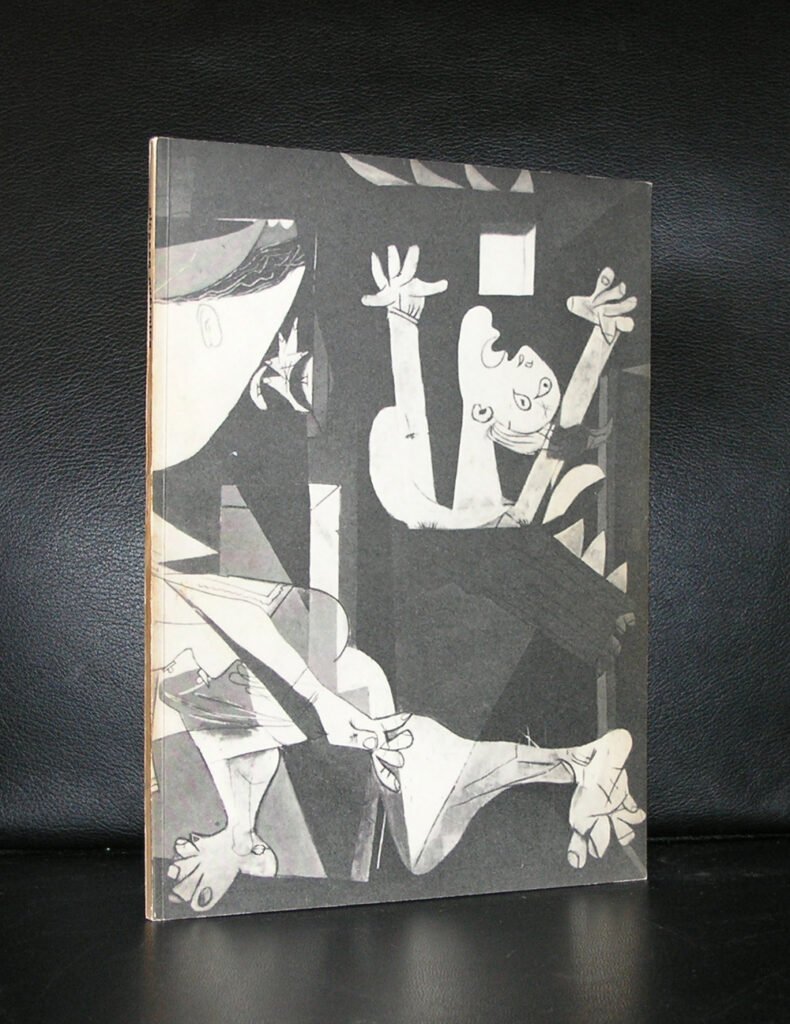
One of the most striking choices was the one he took away: color. Guernica is painted entirely in black, white, and shades of gray. The absence of color gives the work the feel of a newspaper photograph or a film still, which suits a painting born from news reports. It also strips away any comfort. There is nothing decorative here, only shape, light, and anguish.
The painting is crowded with figures compressed into a shallow, claustrophobic space, as if a single room had collapsed around them. Cubist fragmentation, the style Picasso had helped invent decades earlier, serves here as a language of shattering.
- The horse: Pierced by a spear and twisting in agony at the center, it is often read as the suffering of the innocent.
- The bull: Standing on the left above a mother cradling her dead child, the bull is deliberately ambiguous. Picasso never fixed its meaning, and critics have read it as brutality, resilience, or Spain itself.
- The mother and child: A woman screams with her head thrown back, echoing the long tradition of the Pietà, but stripped of any consolation.
- The fallen soldier: On the ground lies a figure clutching a broken sword, from which a small flower grows. It is a quiet, fragile gesture of hope.
- The lamp and the light bulb: A woman reaches out with an oil lamp while a bare electric bulb glares overhead like an eye, suggesting both witness and judgment.
Part of what makes Guernica endure is this refusal of a single explanation. Picasso resisted spelling out the symbols, insisting the painting should speak for itself. That openness lets each generation find its own wars in it.
At the Exposition, reactions were mixed. Some visitors were confused or unmoved, and a few critics thought it too abstract to work as protest. But the painting soon began a long journey. It toured Europe and North America to raise funds and awareness for Spanish refugees, and it eventually settled at the Museum of Modern Art in New York, where Picasso asked that it remain until democracy was restored in Spain.
That day came after Franco's death in 1975. Guernica was returned to Spain in 1981, six years after Franco's death and eight years after Picasso's own, and after a period of restoration and protection it now hangs in the Museo Reina Sofía in Madrid, behind security befitting its status.
Few works of art have been invoked in political life as often as Guernica. A tapestry reproduction hung for years at the United Nations in New York, outside the Security Council chamber. In February 2003, as the United States made its case for war with Iraq, the tapestry was covered by a curtain during press appearances at that spot, an episode that sparked debate about whether the cover-up was a coincidence or a convenience. Whatever the reason, the controversy proved how potent the image remains.
The painting has been reproduced on banners, murals, and protest signs around the world. Its power lies in the fact that it is not about a single town or a single date. It is about what violence does to bodies, families, and ordinary life.
Picasso had long been admired as a formal innovator, a man who broke apart the picture plane. Guernica showed that those tools could serve conscience as well as experiment. It is proof that a modern, abstracted style could carry as much moral weight as any realist depiction of war.
More than eighty years on, we are used to seeing atrocity delivered in real time through screens. Guernica reminds us that the challenge is not just to witness suffering but to feel it. Picasso gave a bombed town in northern Spain a face, or rather many faces, all turned toward us, all still screaming.
www.ftn-books.com has several publications on Picasso and 2 specially devoted to Guernica.