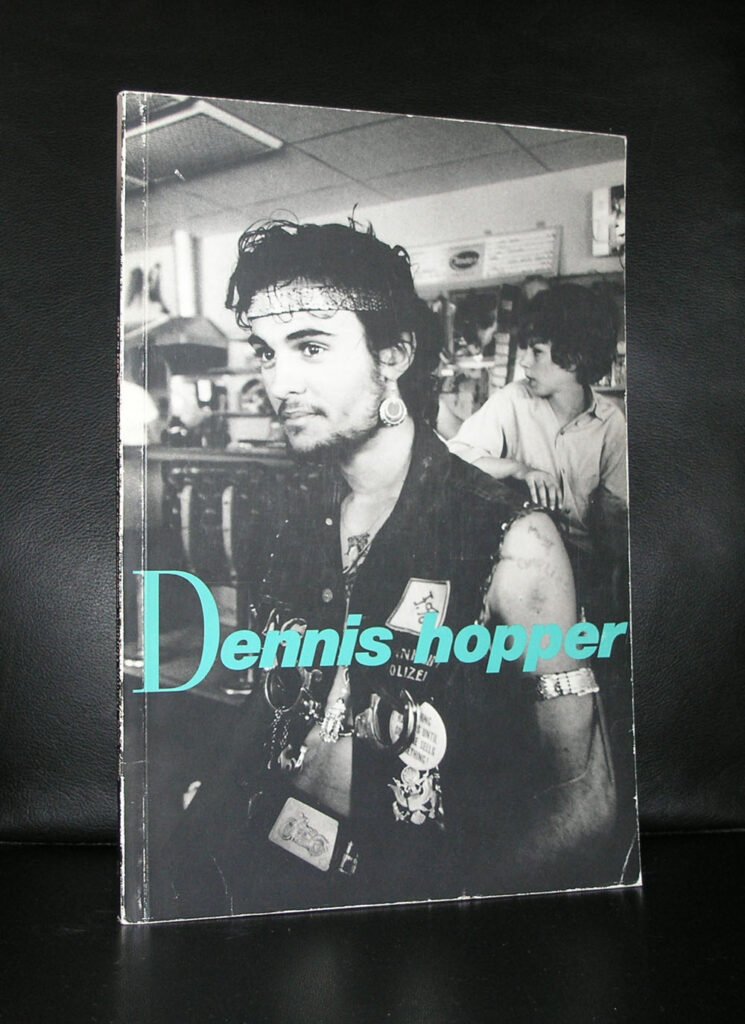
Dennis Hopper the man behind the lens
Posted by wilfried van den elshout on
Dennis Hopper, the Man Behind the Lens
Most people know Dennis Hopper as the wild-eyed actor of Easy Rider and Blue Velvet. Fewer know that for a stretch in the 1960s he was one of the sharpest observers of American culture with a camera in his hands.
The story goes that his first wife, Brooke Hayward, gave him a Nikon in 1961. He took to it immediately, and for the next several years he carried it everywhere, shooting without any particular plan beyond curiosity. He was in the middle of a remarkable moment, and he had the access to prove it.
Hopper’s circle was a who’s who of the era: Andy Warhol, Jane Fonda, Paul Newman, Jasper Johns, Ed Ruscha, and the Hells Angels, all of whom turned up in his pictures. He photographed the Selma to Montgomery civil rights march in 1965, and he captured Martin Luther King Jr. in the Alabama crowds. He shot the Los Angeles art scene as it was forming, including the Ferus Gallery crowd, and he documented the hippie counterculture in places like Taos, New Mexico.
What makes the work special is the lack of distance. He wasn’t an outsider sent to cover a scene. He was a participant, and his subjects relaxed around him. The portraits feel unguarded and a little mischievous, as though the photographer is in on the joke.
Hopper’s compositions show real training. He was an avid painter and collector, and his photographs often play with framing, graphic shapes, and the accidental poetry of urban surfaces. One of his best-known images, Double Standard (1961), shows a Los Angeles intersection with signs and a car windshield layered into a pop-art composition. It reads like a painting, and it looks forward to the Pop movement that was just around the corner.
In 1961 he had a show of his work in Fort Worth, and then the photography went quiet. Much of it, around 18,000 images, was set aside as his career and life took other turns. The work resurfaced decades later, and exhibitions in the 2000s and beyond gave it the recognition it deserved. His archive is now considered a vital record of 1960s America.
Hopper’s photographs remind us that the “rebel actor” persona was only one piece of a restless creative mind. Behind the camera, he was attentive, generous with his subjects, and visually sophisticated. If you only know him from the screen, his photography is worth a look. It shows an artist who simply loved seeing.
www.ftn-books.com has the Stedelijk Museum published catalog for his exhibition now available.
Share this post
- Tags: dennis hopper, easy rider, fonda, hopper, photography, warhol