Anselm Kiefer and the Jericho Towers
Posted by wilfried van den elshout on
In 2007, two lurching concrete towers appeared in the Annenberg Courtyard of London's Royal Academy, rising 14 and 16.5 metres above the Palladian symmetry of Burlington House. Built from reinforced concrete components stacked in tiers, the towers looked like the remains of a bombed-out apartment block from a Middle Eastern war zone. This was Anselm Kiefer's Jericho and like most of Kiefer's work, it was less a sculpture than a provocation dressed as architecture.
The towers weren't built for London. They first appeared in September 2004 inside a disused Pirelli factory in Milan, part of a larger series Kiefer began in his sprawling studio at Barjac, in the south of France. The Barjac towers sometimes called The Seven Heavenly Palaces each weigh around 90 tons and stand between 13 and 19 metres tall, built using the angular modules of shipping containers. Kiefer wedged lead books between the levels, letting the weight of the concrete compress and lock them in place, which paradoxically helps stabilize the whole precarious structure.
That precariousness is the point. These are not towers built to reassure. At the Royal Academy, lead sheets pressed between concrete slabs formed two towers that echoed and confronted the buildings around them. Visitors could walk inside and look straight up through rough openings in each floor , less a monument to be admired from a distance than a ruin you're invited to stand inside, uncertain whether it's still collapsing or was always meant to look this way.
Critics have never settled on a single reading, and Kiefer clearly likes it that way. Many saw an allegorical echo of the Twin Towers, the aesthetic of collapse merging with the visual language of countless other conflict zones. Others reached further back. To some viewers, the towers evoked the instability and grandiosity of empires past and present; to others they read as a bridge strung between earth and heaven. Kiefer himself has spoken of the towers as symbols of mystical ascension through seven levels toward the heavens , hence "heavenly palaces" for structures that look more like blast damage than paradise.
That contradiction , devastation dressed as transcendence , is the engine of almost everything Kiefer makes. Critic Norman Rosenthal described the towers as echoes of history, both divine and real, mirrors onto which viewers project their own associations , towers can be aspirational, sinister, or symbols of oppression, often all three at once. Kiefer doesn't resolve the tension; he builds monuments to it, using materials , lead, concrete, ash, straw , that are already decaying even as they're assembled. Change and decay are built into the work deliberately, the way planned obsolescence was built into American cars.
The Barjac towers still stand today, left to the elements in a studio Kiefer has since abandoned, by his own wish, to nature. It's a fitting end for towers that were never meant to look finished only permanently, productively, on the verge of falling.
Want this as a downloadable document, or would you like me to pull in some images of the towers alongside the text?
and write the story how Museum Voorlinden acquired these
How Jericho Found a Home in the Dunes
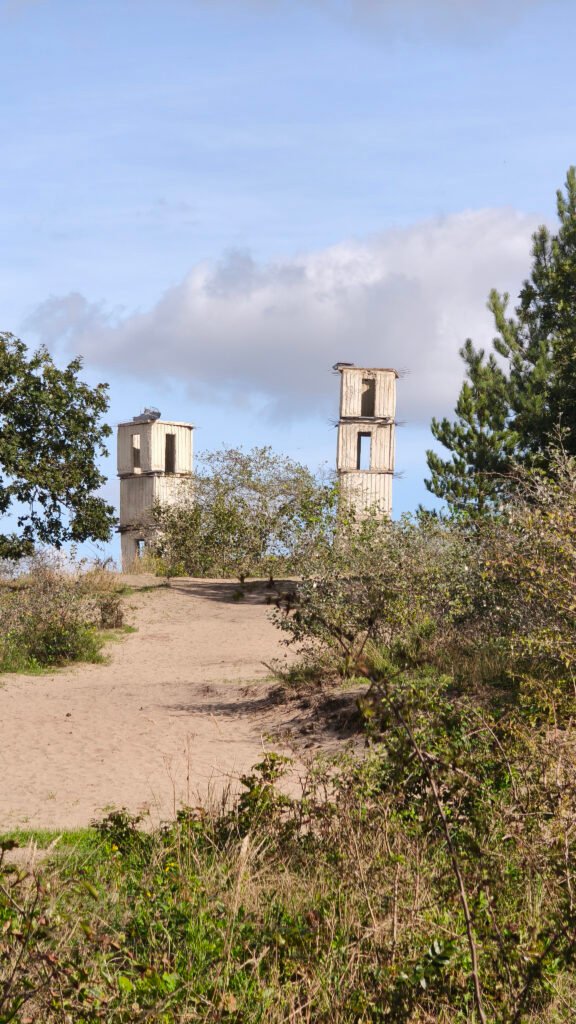
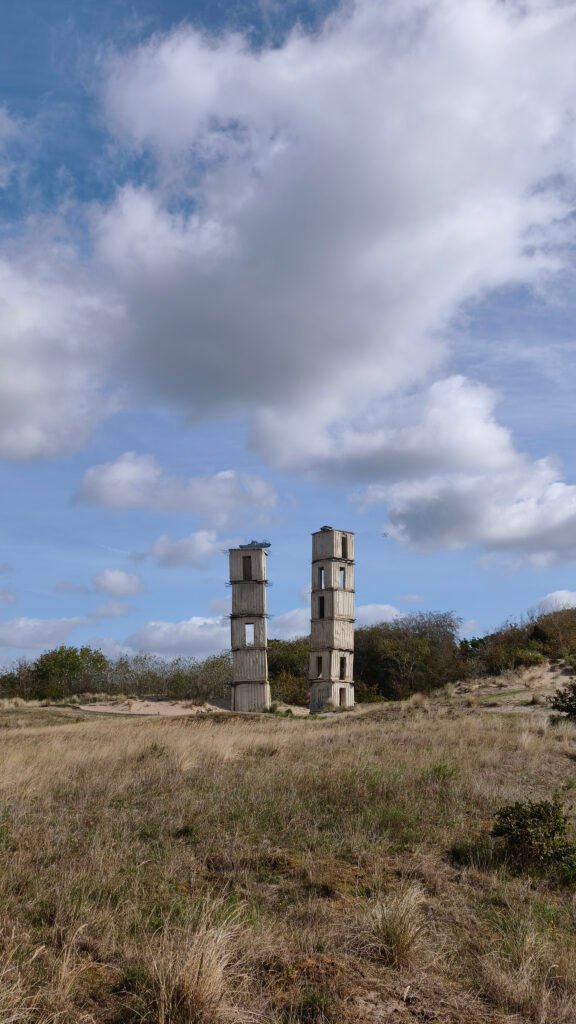
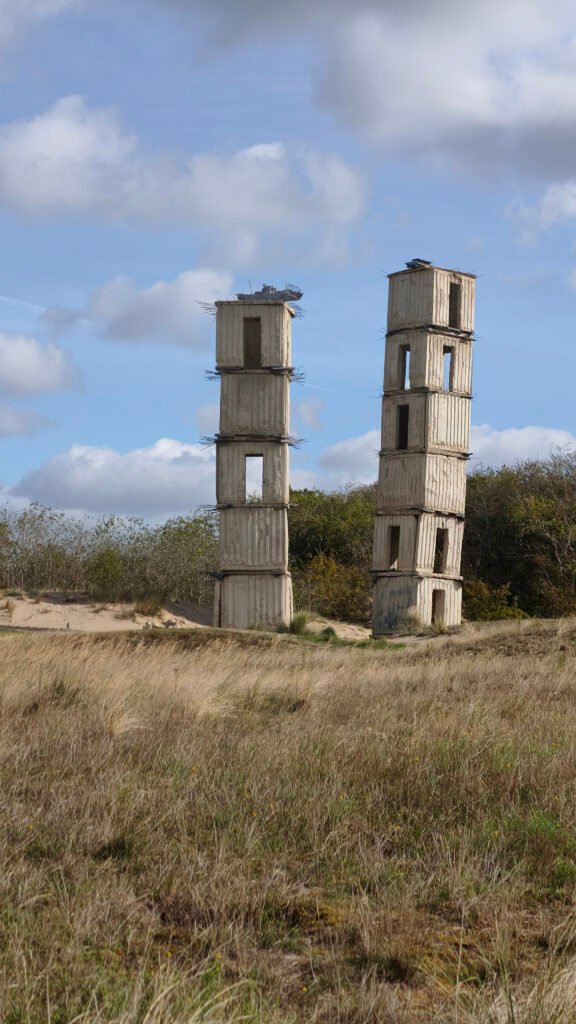
Unlike the Royal Academy towers, which came down after their London stint in 2007, the pair now standing among the dunes at Museum Voorlinden in Wassenaar were built to stay. They're part of the same restless family of works Kiefer has been raising and dismantling since Barjac. Milan's Seven Heavenly Palaces, the Royal Academy's Jericho, the Grand Palais towers, but the Voorlinden pair are a distinct, permanent installation: two stacks of bunker-like concrete blocks rising 15 and 17.5 metres out of the sand, a ten-minute walk from the museum itself.
The man responsible for getting them there is Joop van Caldenborgh, the Dutch industrialist behind the Caldic chemical group, who has spent more than fifty years assembling one of the largest private contemporary art collections in the Netherlands. Kiefer had long been part of that collection alongside Richard Serra, Damien Hirst, Anish Kapoor, and Louise Bourgeois well before Van Caldenborgh decided, in his own words, to stop keeping the collection to himself. In 2016 he opened Museum Voorlinden on his family estate near The Hague: a quiet, glass-and-stone building set inside forty hectares of forest, dune meadow, and coastline, with landscaping by Piet Oudolf.
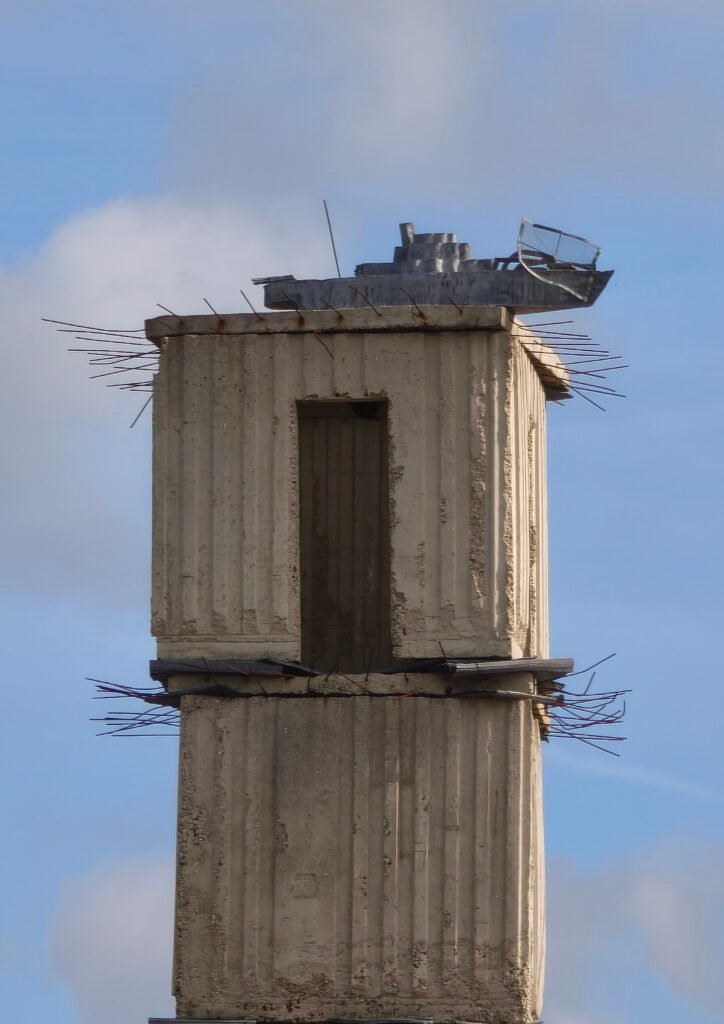
Rather than hang Kiefer indoors, Van Caldenborgh gave him the dunes. It's a fitting swap: Kiefer's towers have always needed raw exposed ground to make sense ,parking lots, disused factories, gravel courtyards and the Voorlinden landscape, all sand and salt wind, does the job better than any gallery could. The concrete tiers already look weathered by the elements before the North Sea has had a chance to touch them, and inside each tower Kiefer wedged his usual motifs, lead books, one perched as a stack on the roofline of one tower, and on the other, a small ship left balancing improbably on the edge, as if mid-shipwreck.
Precise commercial details of the acquisition , what was paid, when the deal closed, whether the towers were commissioned outright for the estate or built and then placed there , aren't part of the public record, which isn't unusual for a private collector's transactions with a living artist. What's documented is the outcome: a Kiefer solo show became a running thread at Voorlinden (recurring exhibitions in 2019, 2020, and the major 2023–24 Bilderstreit retrospective), and the towers themselves became one of the estate's permanent, always-on-view works, free to wander into, any day the museum is open, no ticket required to reach them once you're on the grounds.
It says something about Van Caldenborgh's approach to collecting: rather than borrowing prestige from an artist for a single high-profile moment, as the Royal Academy did for a few months in 2007, he built Kiefer permanently into the landscape , treating the towers less like acquisitions and more like geological features that happened to need a concrete mixer.
for Kiefer publications please visit www.ftn-books.com