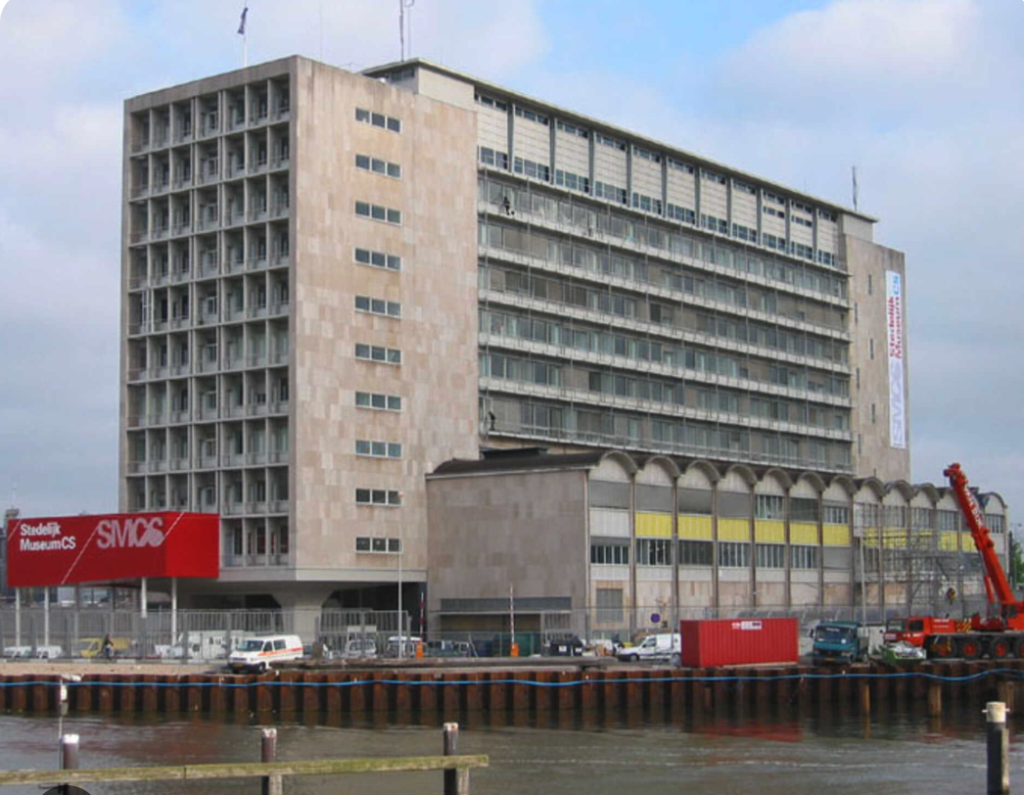
If you visited Amsterdam's Stedelijk Museum sometime between 2004 and 2008, you didn't find it on the Museumplein next to the Rijksmuseum and Van Gogh Museum. Instead, you'd have taken an elevator up a stark 1968 office tower right by Centraal Station. That's the story of Stedelijk Museum CS , an unlikely but formative chapter in the museum's history.
By the early 1990s, the Stedelijk's original 1895 building on Paulus Potterstraat was showing its age. It lacked the fire safety and climate-control standards a modern museum needs to protect its collection, and after years of discussion about how to fix this, the city finally moved forward with a full renovation and expansion. The building closed to the public at the end of 2003, with exhibitions dismantled in anticipation of the coming renovation and expansion, a decision partly prompted by the expiration of the building's occupancy permit.
But a renovation of that scale doesn't happen overnight. the architect selection alone (eventually won by Benthem Crouwel) followed a Europe-wide competition among five firms that began in mid-2004. The actual construction wouldn't wrap up until 2012. The museum needed somewhere to go in the meantime.
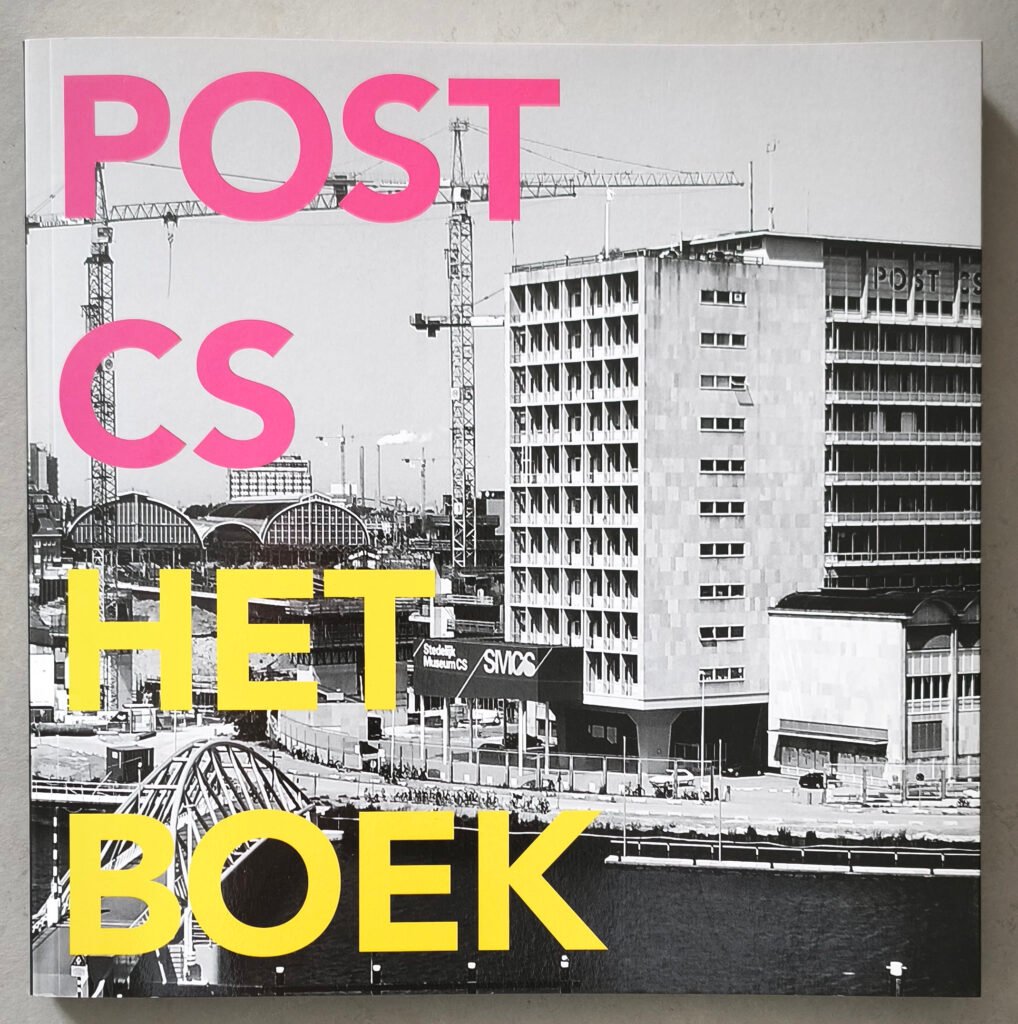
The solution was a former Post Group high-rise at Oosterdokskade, near Central Station, opposite the Maritime Museum and NEMO science center. Architects Zwarts & Jansma took on the job of converting the building's second and third floors into exhibition space, working under serious time pressure — with no real program of requirements at the outset, they used November and December to design, let contracts in January, and had construction underway by February 1.
The renamed "Stedelijk Museum CS" opened its doors on May 16, 2004 — the "CS" nodding both to its location near Central Station and to its role as a shared building, since it housed a design center and a restaurant/club alongside the museum. The temporary home offered roughly 7,000 square meters, with about 5,500 devoted to exhibitions.
More than a stopgap
What could have been a purely functional interlude turned into something the museum came to value in its own right. The Stedelijk ended up staying at Post CS for four and a half years, during which it formed a partnership around the Monique Zajfen Collection, launched a project space called "Docking Station" for emerging artists, and drew major crowds , including 600,000 visitors for an Andy Warhol video exhibition in 2008.
Looking back, then-director Gijs van Tuyl described the Post CS chapter as an "unexpected base" from which the museum explored art with an open mind, gaining new insight into how art relates to contemporary society , insight he said would carry over once the Stedelijk returned to its permanent home on the Museumplein.
By the time it left Post CS in 2008, the museum had welcomed 904,238 visitors over its stay there , proof that a temporary museum in a converted post office could still make a lasting mark.
www.ftn-books.com has some very nice publications from that CS period now available.