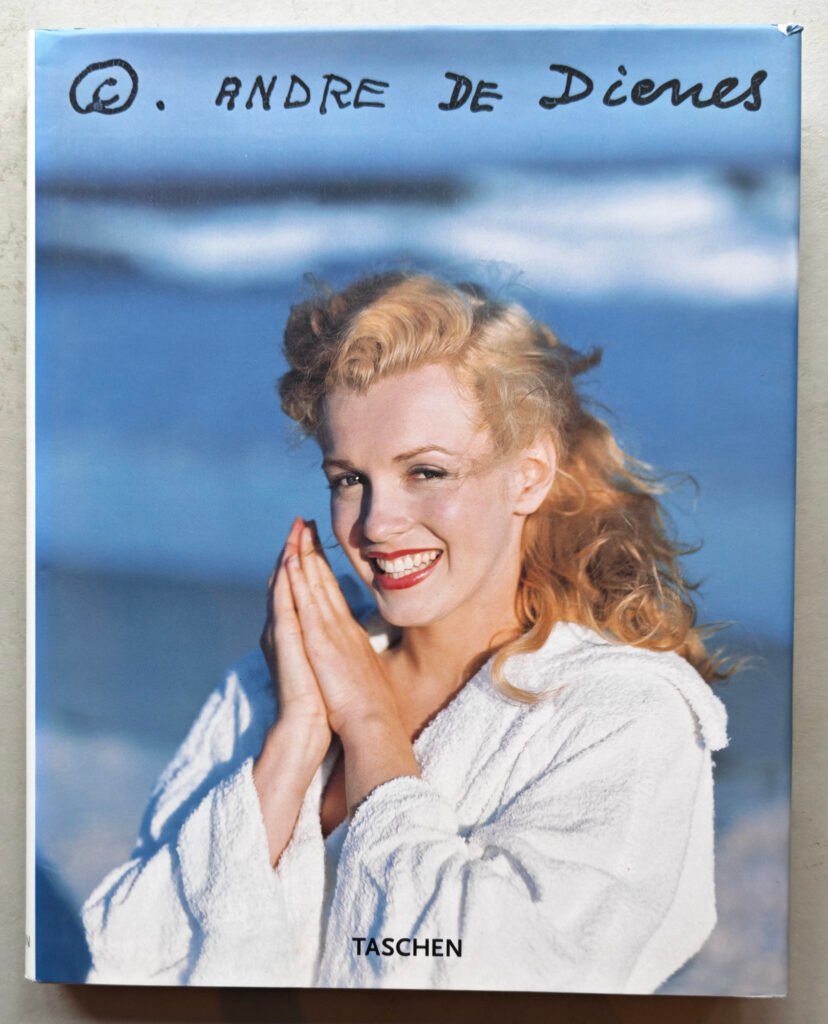
Andre de Dienes
Posted by wilfried van den elshout on
André de Dienes: The Photographer Who Saw a Star Before the World Did
Some photographers are known for a single image. André de Dienes is known for a moment in time: the afternoons he spent photographing a young model named Norma Jeane Dougherty, years before she became Marilyn Monroe. Yet reducing his legacy to that connection undersells him. His career raises questions that matter more now than ever, about authorship, intimacy, the ownership of images, and the way a photograph can outlive the circumstances that made it.
Born in Hungary in 1913, de Dienes trained in photography in Europe before emigrating to the United States in the late 1930s. He arrived at a time when the American photographic landscape was being shaped by documentary work, studio portraiture, and the rise of illustrated magazines. He settled on the West Coast, where Hollywood's studio system was building the image machinery that defined mid-century celebrity.
In 1945, de Dienes photographed Norma Jeane Dougherty, then a young woman working in a factory and beginning to model, on the beaches and in the landscapes of Southern California. The resulting images are notable for their naturalness. There are no elaborate studio lights or glamour gowns, just wind, water, and a relaxed, unguarded presence. Many of these pictures are among the earliest professional photographs of the woman who would become one of the most recognizable faces of the twentieth century.
What makes this work important is its intimacy. De Dienes wasn't manufacturing a celebrity persona. He was recording a person in the process of becoming someone else. That tension, between the private self and the public image, sits at the heart of much contemporary photography and social media culture.
Pre-fame imagery and the archive. Today we are surrounded by "early days" content: throwback photos, behind-the-scenes footage, and archival revelations about public figures. De Dienes's work anticipated this fascination with origin stories. His photographs show how an archive can reshape a person's narrative long after the fact.
Authorship and collaboration. The relationship between photographer and subject is central to ethical debates in photography now. De Dienes's images depend on trust and mutual creativity, not just a camera pointed at a passive figure. Contemporary portrait photographers working with nonprofessional models, activists, and community members face the same questions about who shapes the image and who benefits from it.
Ownership and rights. De Dienes's career was also marked by disputes over the rights to his Monroe negatives and prints, as is common with early work that becomes valuable decades later. These controversies foreshadow ongoing conversations about licensing, copyright, and the commercial afterlife of photographs, especially in an era when a single image can be circulated endlessly.
Naturalistic style. His preference for available light, outdoor settings, and spontaneous posing prefigured a shift away from rigid studio conventions. Much of today's lifestyle, fashion, and documentary photography borrows this sensibility.
André de Dienes deserves attention not because he is a footnote to a famous name, but because his work asks enduring questions. What does it mean to photograph someone before the world knows who they are? Who owns a picture of a moment that was never meant to be public? How do we balance artistry, intimacy, and commerce?
Looking at his photographs today, we see more than a young woman on a beach. We see the beginning of a story, and a reminder that the images we make are never only about the subject. They are also about the person holding the camera, and the relationship that makes the picture possible.
www.ftn-books.com has several de Dienes publications now available.